
Mileage reimbursement sounds straightforward on paper: an employee drives for work, submits their kilometres, and gets paid back at the approved rate. But when that process breaks down — through outdated rates, manual calculation errors, or missing documentation — the consequences ripple outward in ways that most finance teams do not anticipate. Incorrect mileage reimbursement is not just an accounting inconvenience. It can trigger tax liabilities, invite regulatory scrutiny, and quietly erode the trust employees place in their employer.
Understanding what actually goes wrong, and why, is the first step toward building a reimbursement process that works reliably for everyone involved.
Tax and payroll consequences of mileage errors
When mileage compensation is paid incorrectly, the tax implications depend on the direction of the error. Overpayments and underpayments both create problems, just in different ways.
If an employee receives more than the approved tax-free mileage rate, the excess amount may be treated as taxable income, subject to income tax and potentially other payroll obligations. If the overpayment is not caught and corrected, the employer may face penalties for failing to report compensation correctly. Underpayments carry their own risks: correcting historical payroll errors is time-consuming, costly, and often requires amended filings with tax authorities.
Documentation requirements add another layer of compliance risk. Tax authorities typically require that mileage reimbursements be supported by records showing the date, destination, purpose, and distance of each trip. When reimbursements are processed without adequate supporting documentation, the entire expense claim becomes vulnerable during an audit.
Legal and compliance risks for employers
Beyond tax reporting, incorrect employee reimbursement can expose an organization to legal liability, particularly where labour law intersects with expense obligations. In many jurisdictions, employees have a legal right to be reimbursed for legitimate work-related travel expenses, and systematic underpayment can attract regulatory attention.
The specific rules vary considerably by country and can change over time, so organizations operating across multiple jurisdictions need to stay current with local requirements rather than applying a one-size-fits-all approach.
How mileage mistakes affect employee trust and retention
The financial consequences of mileage reimbursement errors are significant, but the human cost is often underestimated. Employees who drive regularly for work — such as field sales teams, service technicians, or consultants — are often among the most mobile and commercially critical members of an organization. When their travel reimbursement is consistently wrong, it signals that the company’s administrative systems are not reliable.
Repeated underpayments, even modest ones, accumulate into a meaningful financial burden for employees who are out of pocket while waiting for corrections. This creates frustration that goes beyond the money itself and reflects a perceived lack of respect for the employee’s time and contribution. Fairness in compensation, including expense reimbursement, is widely recognized as a driver of workplace satisfaction — and high-performing employees with options are more likely to leave organizations where administrative failures make them feel undervalued.
Common causes behind incorrect mileage reimbursements
Most mileage reimbursement errors are not the result of fraud or bad intent. They stem from process weaknesses that create room for mistakes at multiple points in the workflow.
Manual data entry and calculation errors
When employees manually log trip distances in spreadsheets or paper forms, rounding errors, transposed figures, and forgotten trips are inevitable. A single incorrect rate applied across many claims can produce substantial aggregate errors before anyone notices.
Outdated reimbursement rates
Tax authorities update approved mileage rates periodically, and organizations that do not update their internal systems promptly risk paying at the wrong rate for extended periods. For companies operating across multiple countries, this challenge is compounded: each jurisdiction may have different rates, different update cycles, and different documentation requirements.
Inconsistent approval workflows
When approval processes are informal or poorly defined, claims may be approved without adequate review, or rejected inconsistently depending on who handles the submission. This creates both overpayment risk and employee dissatisfaction when similar claims are treated differently by different approvers.
How automated mileage tracking prevents reimbursement errors
Automation addresses the root causes of mileage errors rather than simply catching them after the fact. When mileage tracking is integrated directly into an expense management platform, the entire chain — from trip logging to reimbursement calculation to accounting entry — becomes structured and auditable.
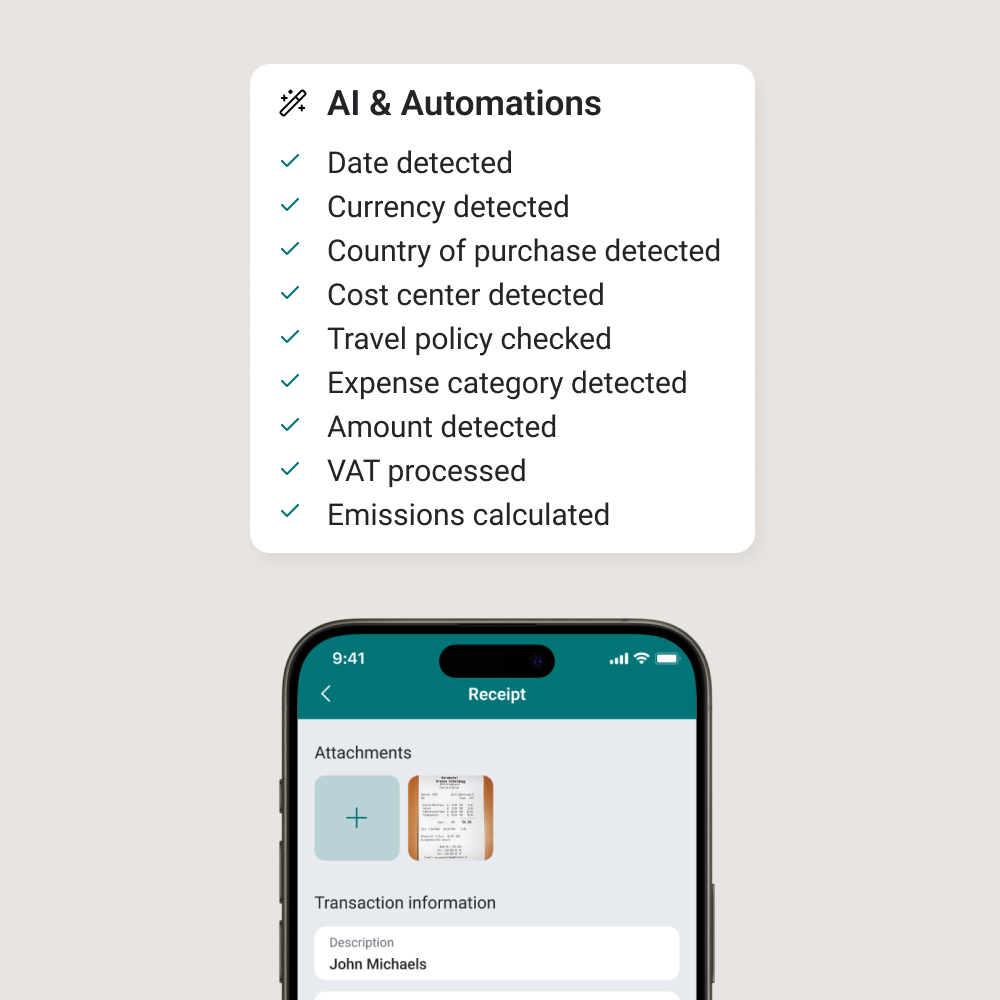
Bezala is an expense management platform built to handle exactly these challenges. Its integrated map features calculate trip distances automatically based on start and end points, eliminating manual distance entry and the errors that come with it. Bezala also applies the correct reimbursement rate for the relevant country and employee category, and keeps those rates up to date as tax authorities make changes — without requiring manual updates across spreadsheets or payroll configurations.
Approval workflows in Bezala can be configured to enforce documentation requirements before a claim is submitted, so incomplete records are caught at the source rather than discovered during an audit. Finance teams gain full visibility into mileage claims across the organization, employees receive accurate reimbursements without chasing corrections, and the business maintains the documentation needed to demonstrate compliance.
For organizations managing travel reimbursement across multiple countries, that combination of accuracy, consistency, and auditability is not a convenience — it is a genuine operational necessity.
This content was generated with the help of AI and it may contain mistakes