
A corporate card is issued to an employee by a company to pay for business expenses directly, while a personal credit card is issued to an individual for their own financial use. The fundamental difference is ownership and purpose: a corporate card belongs to the business, whereas a personal card belongs to the individual. Understanding this distinction matters because it affects liability, spending controls, expense reporting, and how costs flow through a company’s finances.
Who actually owns a corporate card?
A corporate card is owned by the company, not the employee who carries it. The business applies for the card, sets the credit limit, defines spending rules, and bears primary responsibility for the account. The employee is an authorized user, not the cardholder in the legal or financial sense. A personal credit card, by contrast, belongs entirely to the individual who applied for it.
This ownership distinction has real consequences. Because the company owns a corporate card, it can monitor transactions in real time, restrict spending by category or merchant, and cancel the card immediately if an employee leaves. With a personal card, the company has no visibility into the account and no ability to enforce any controls whatsoever. The employee is the sole decision-maker about how the card is used, and the company only sees the expense after the fact, when a reimbursement claim is submitted.
How does liability work differently for each card type?
Corporate cards typically operate under company liability, meaning the business is responsible for paying the card balance regardless of which employee made the purchases. Personal credit cards place full liability on the individual cardholder. Some corporate card programs offer individual liability models, where the employee is technically responsible for payment and then reimbursed, but the card is still issued under a corporate agreement and governed by company policy.
Under a company-liability model, unpaid balances affect the company’s credit rating, not the employee’s personal credit score. This protects employees from financial exposure when they travel or spend heavily on behalf of the business. Under individual liability, the risk sits with the employee until reimbursement arrives, which can create cash flow pressure, particularly for frequent travelers or those making large purchases.
What can corporate cards be used for that personal cards cannot?
Corporate cards are purpose-built for business spending and come with controls and integrations that personal cards simply do not offer. Companies can restrict a corporate card to specific merchant categories, set per-transaction or daily spending limits, and link the card directly to their accounting or expense management systems. These capabilities do not exist on personal credit cards.
Beyond controls, corporate cards often provide enhanced data feeds that categorize transactions automatically and push them into finance systems without manual entry. Some programs also offer higher credit limits suited to business volumes, travel insurance, and purchasing protections calibrated for commercial use. A personal card may technically work at the same merchant, but it generates no structured data, carries no company-defined rules, and creates no automatic audit trail for the finance team.
How do corporate cards simplify expense reporting?
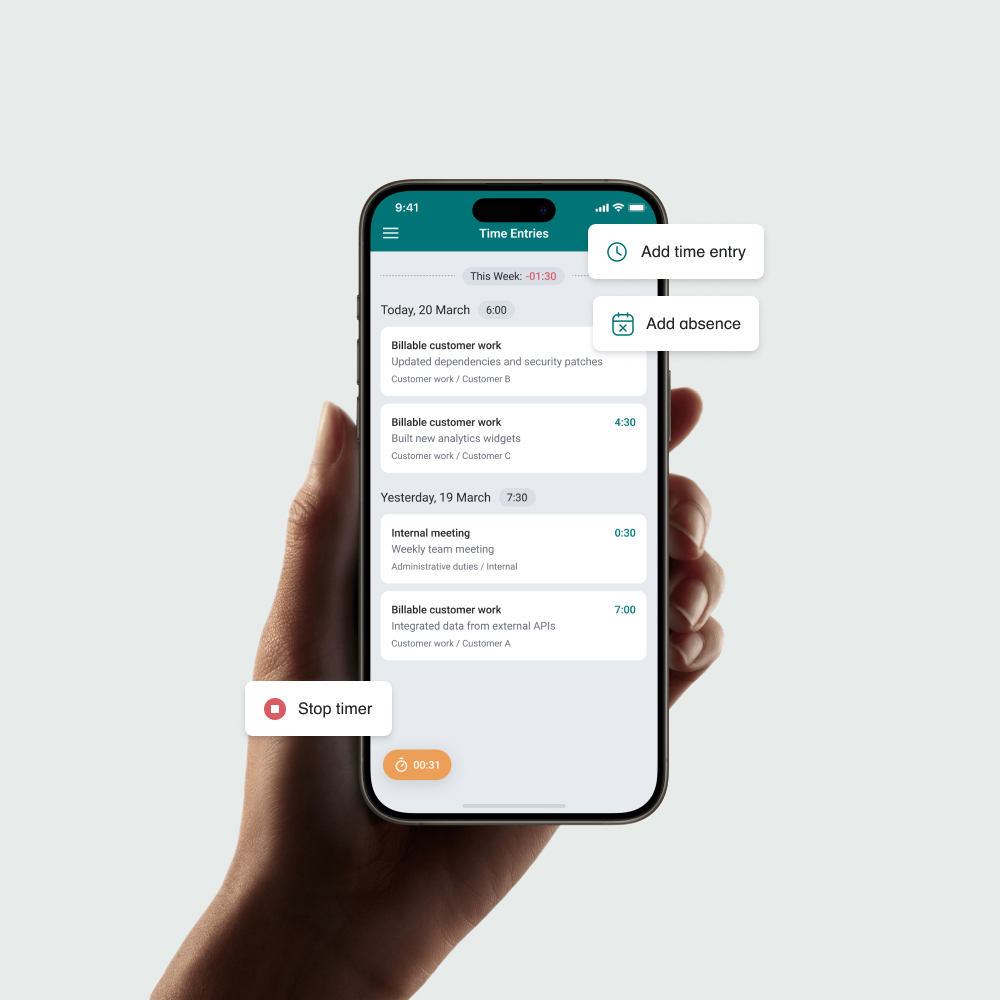
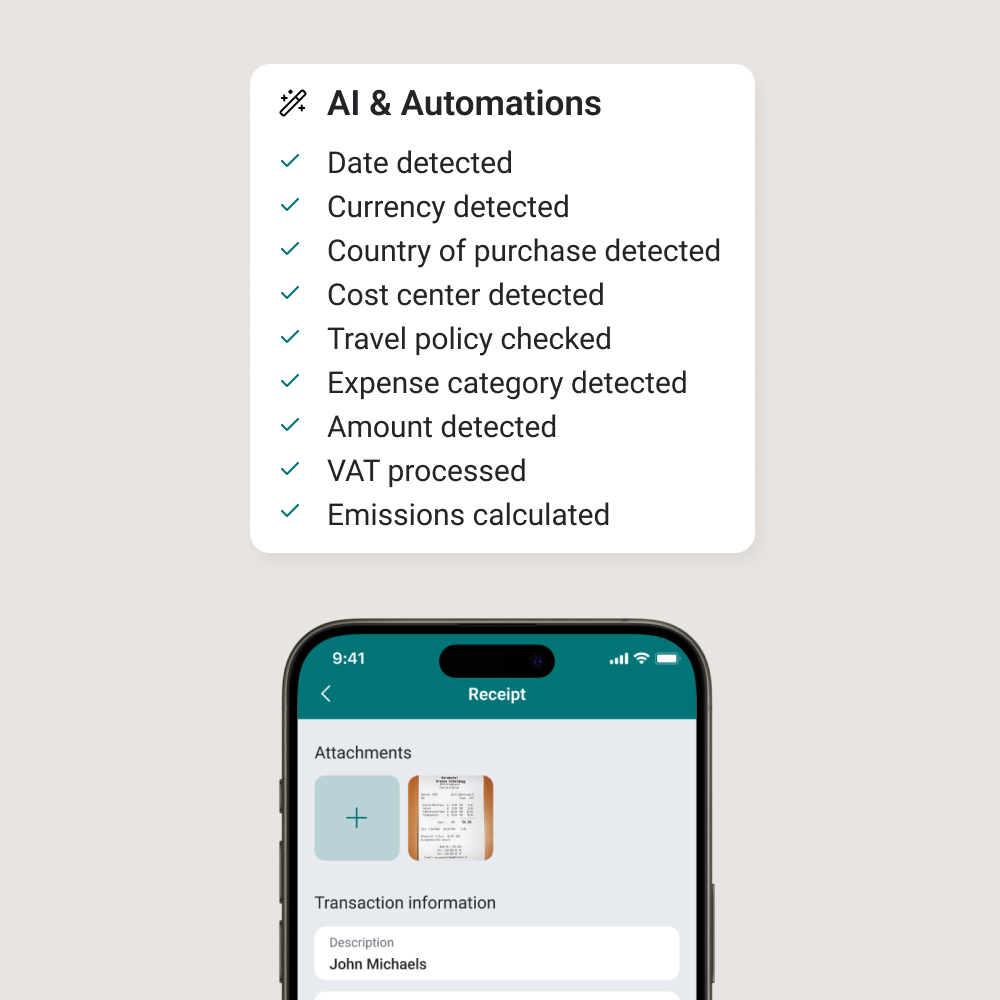
Corporate cards eliminate the most time-consuming steps in expense reporting by capturing transaction data automatically. When an employee pays with a corporate card, the purchase amount, date, merchant, and category are recorded instantly. With the right expense management platform, that data flows directly into the system, often requiring the employee to do nothing more than attach a receipt photo.
With personal card spending, the process runs in reverse. The employee pays out of pocket, collects paper or digital receipts, manually enters each expense into a claim form, submits it for approval, and then waits for reimbursement. Each step introduces delay and the possibility of error or lost documentation. Corporate cards compress that entire cycle because the transaction is already in the system before the employee has left the checkout.
Platforms like Bezala take this further by connecting company card management and receipt handling on the same platform, so finance teams see every transaction in real time and employees receive automatic reminders if a receipt is missing. This kind of integration is only possible when the card and the expense system share data, which is a structural advantage that personal cards cannot replicate.
Should employees use personal cards for business expenses?
Employees should avoid using personal cards for business expenses whenever a corporate card is available. Using a personal card creates unnecessary financial risk for the employee, delays visibility for the finance team, and adds manual work to the reimbursement process. However, in organizations where corporate cards are not yet issued to all staff, personal card use is sometimes unavoidable and can be managed with clear policy and a reliable reimbursement process.
The practical problems with personal card use compound over time. Employees may carry a balance while waiting for reimbursement, mixing personal and business transactions makes bookkeeping harder, and finance teams lose the real-time visibility they need to manage budgets accurately. For occasional small purchases, the friction is manageable. For employees who travel regularly or handle significant business spending, relying on a personal card is a poor long-term arrangement for both the individual and the company.
What should companies look for in a corporate card program?
Companies should evaluate a corporate card program based on spending controls, integration with their finance systems, visibility into real-time transactions, and the ease with which employees can attach receipts and comply with policy. A card that generates data but cannot connect to your accounting platform still creates manual reconciliation work. The card and the expense workflow need to function as a single system.
Key features worth prioritizing include:
- Merchant category restrictions that prevent out-of-policy spending before it happens
- Real-time transaction feeds that give finance teams immediate visibility
- Automated receipt matching that reduces the burden on employees
- ERP and accounting integrations that eliminate manual data entry
- Multi-currency support for companies with international operations
- Usage-based or scalable pricing so costs align with actual activity
Wide acceptance is also a practical requirement. A business expense card accepted across major card networks ensures employees are never blocked at the point of payment, whether they are purchasing domestically or traveling abroad. The goal is a program that removes friction for employees while giving finance teams the control and data they need to close the books accurately and on time.
This content was generated with the help of AI and it may contain mistakes