

Business travel emissions fall under **Scope 3**, not Scope 2, in nearly all cases. The GHG Protocol places employee travel in Scope 3 Category 6 (business travel) and Category 7 (employee commuting) because the emissions occur in assets the company does not own or control. Scope 2 covers only the indirect emissions from purchased electricity, heat, or steam consumed in facilities the company operates. The sections below unpack each question in detail, from definitions to measurement methods and reporting tools.
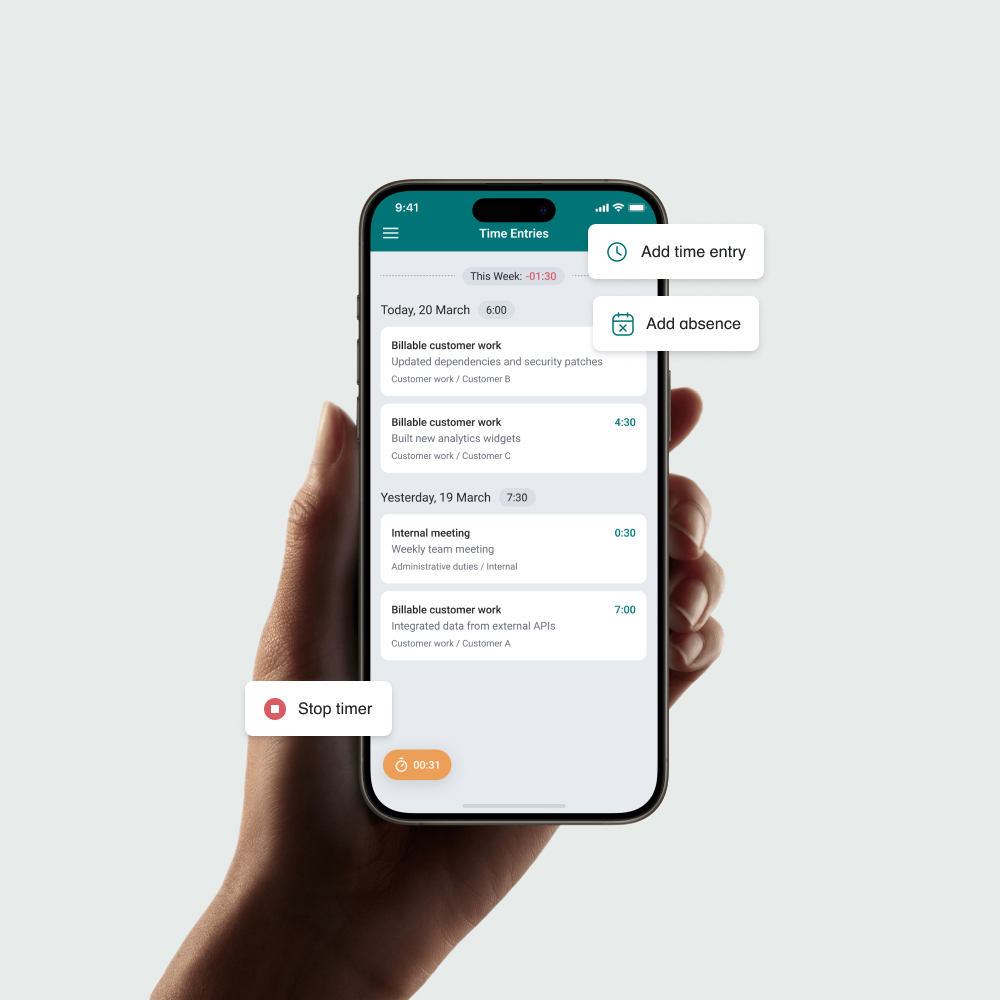
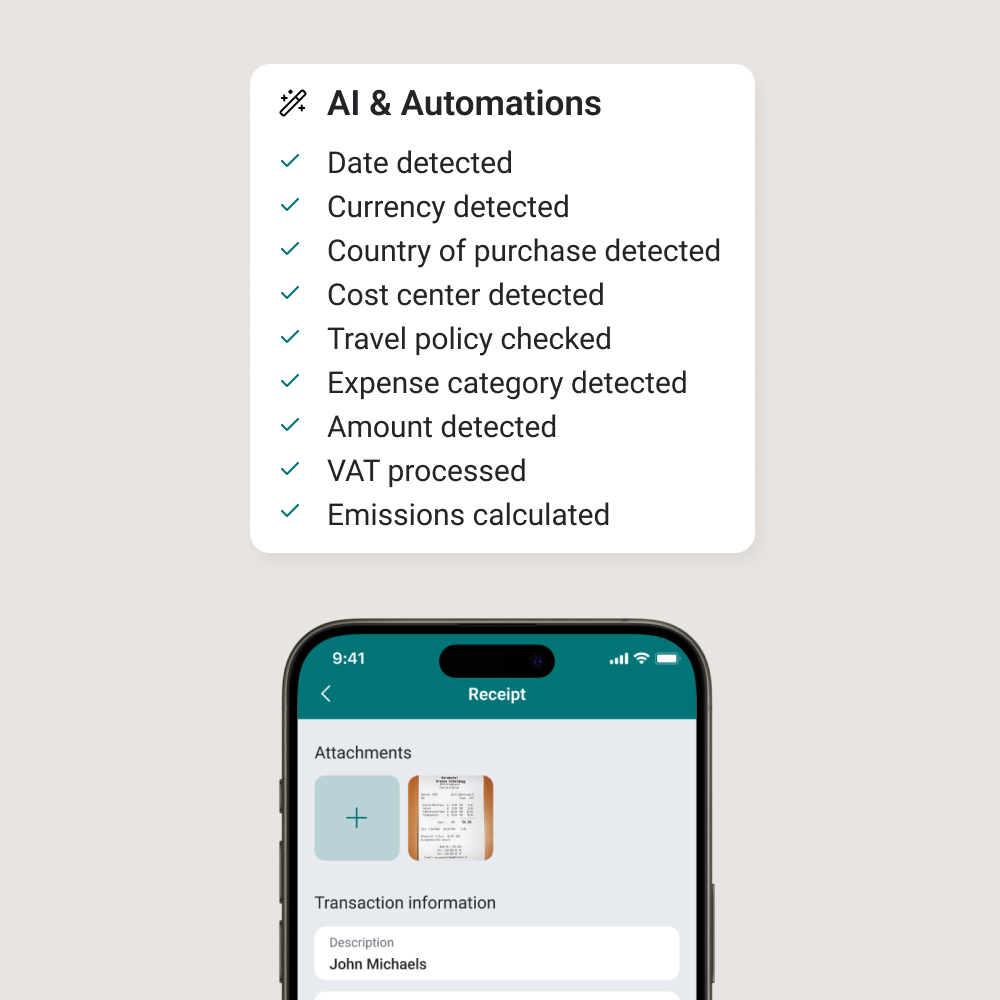
Getting this classification right starts with clean, well-tagged travel data — which is exactly where a lot of companies lose accuracy. Bezala’s expense management platform captures travel details (transport mode, distance, cabin class, vehicle type) directly at the point of expense submission, so the data needed for Scope 3 categorization is already structured and ready for emissions calculation, rather than reconstructed later from scattered receipts and booking exports.
How does business travel get classified under Scope 2 vs. Scope 3?
Business travel is classified under Scope 3 because it involves energy consumed in vehicles, aircraft, and rail networks that the reporting company does not own or control. Scope 2 is reserved for purchased energy, such as electricity or district heating, consumed within company-operated facilities. The GHG Protocol, the globally accepted framework for carbon emissions reporting, draws this boundary clearly.
The classification logic rests on ownership and control. When an employee boards a commercial flight, the airline owns the aircraft and purchases the fuel. The resulting carbon emissions are therefore upstream of the company’s direct operations. The same principle applies to rental cars, taxis, trains, and hotels. Because the company has no operational control over these assets, all associated travel emissions sit in Scope 3.
Scope 2 emissions, by contrast, arise when a company buys electricity or heat and consumes it in its own offices, warehouses, or data centers. The energy supplier generates the emissions, but the company drives demand for it, which is why the GHG Protocol treats it as an indirect but separately reportable category.
What exactly do Scope 3 travel emissions include?
Scope 3 travel emissions include all greenhouse gas emissions produced by transportation modes used for business travel that the company does not own. Under the GHG Protocol, this falls primarily into Category 6 (business travel) and Category 7 (employee commuting), covering flights, trains, buses, taxis, rental cars, ferries, and hotel stays linked to overnight business trips.
Category 6 covers travel employees undertake on behalf of the company, regardless of how it is booked or paid. A flight to a client meeting, a train journey to a conference, and a hotel stay during a project assignment all belong here. Category 7 covers the daily commute between an employee’s home and their regular workplace, which is also a Scope 3 emission even though it is not traditional “business travel.”
Some frameworks also prompt companies to account for the radiative forcing effect of high-altitude aviation emissions, which amplifies the climate impact of flights beyond the CO2 figure alone. While not universally mandated, including this factor gives a more complete picture of a corporate travel carbon footprint.
When could travel-related energy use appear in Scope 2?
Travel-related energy use appears in Scope 2 only when a company purchases electricity or heat that is consumed in a facility it operates, and that facility is used for travel-adjacent purposes. For example, electricity used to charge a company-owned electric vehicle fleet at a company-operated depot would be a Scope 2 emission.
This scenario is narrow but real. If a company owns and operates a fleet of electric vehicles, the electricity drawn from the grid to charge those vehicles is purchased energy consumed under the company’s operational control, placing it squarely in Scope 2. The vehicle’s movement, however, produces no tailpipe emissions, so there is no additional Scope 1 component from combustion.
By contrast, if employees charge personal or rental electric vehicles at public charging stations, that electricity is not purchased by the company, and the resulting emissions shift back into Scope 3. The distinction always returns to the same question: who purchases the energy, and in whose facility or asset is it consumed?
How are Scope 2 and Scope 3 travel emissions measured differently?
Scope 2 emissions are measured using supplier-specific or market-based electricity emission factors, or location-based grid average factors, applied to kilowatt-hours of purchased energy. Scope 3 travel emissions are measured using distance-based or spend-based emission factors applied to travel activity data such as kilometers flown, train journeys taken, or nights stayed in hotels.
Measuring Scope 2
For Scope 2, the GHG Protocol allows two approaches. The location-based method uses the average emission intensity of the national or regional electricity grid. The market-based method uses the emission factor from the specific energy supplier or from renewable energy certificates the company has purchased. Both methods require metered consumption data from utility bills, which is relatively straightforward to collect.
Measuring Scope 3 travel
Scope 3 travel measurement is considerably more complex. The most accurate approach is the activity-based method, which multiplies actual distance traveled by a mode-specific emission factor (for example, kilograms of CO2 equivalent per passenger-kilometer for economy-class short-haul flights). When distance data is unavailable, a spend-based method uses financial expenditure on travel multiplied by an economic emission intensity factor, though this approach is less precise. Collecting reliable activity data across flights, rail, hotels, and ground transport from multiple booking sources is the primary challenge.
Why does the Scope 2 vs. Scope 3 distinction matter for emissions reporting?
The distinction matters because Scope 2 and Scope 3 emissions are reported separately, carry different data quality requirements, and respond to different reduction strategies. Misclassifying travel emissions inflates or deflates each category, distorting a company’s reported carbon footprint and undermining the credibility of its climate commitments.
Regulators and voluntary frameworks vary in how strictly they require granular disclosure, and the requirements have shifted recently rather than only tightened. The EU’s Corporate Sustainability Reporting Directive (CSRD), for instance, expects in-scope companies to report material Scope 3 categories — business travel is often among the most material for service-sector businesses — but the 2026 Omnibus I simplification package narrowed which companies are in scope (broadly to those with more than 1,000 employees and over €450 million in turnover), delayed reporting for many mid-sized companies by two years, and allows in-scope companies to phase in value-chain (Scope 3) data over up to three years. Investors and procurement teams still use these figures to assess climate risk, so accuracy in categorization matters regardless of a company’s current regulatory scope.
There is also a strategic reason to keep the categories distinct. Reducing Scope 2 emissions typically involves switching to renewable energy suppliers or installing on-site generation. Reducing Scope 3 travel emissions requires changing employee behavior, adopting travel policies, shifting to virtual meetings, or selecting lower-carbon transport modes. These are fundamentally different levers, and they require different ownership within the organization.
What tools or data sources help track Scope 3 travel emissions accurately?
Accurate Scope 3 travel emissions tracking relies on integrating data from travel management companies, expense reports, corporate card transactions, booking platforms, and HR systems, then applying recognized emission factors from sources such as the UK Government’s conversion factors, published annually by the Department for Energy Security and Net Zero (DESNZ), or the International Energy Agency (IEA) datasets.
Expense management platforms play a practical role here. When employees submit travel receipts or log expenses, that transaction data can be tagged by travel category and mapped to emission factors. Platforms that integrate with corporate card systems and accounting tools create a unified data trail that makes it far easier to aggregate travel spend by mode and convert it into CO2 equivalent figures.
Beyond expense data, organizations can use:
- Travel management company (TMC) reports, which often include itinerary-level distance data for flights and rail
- Booking platform APIs that surface passenger-kilometers directly
- Emission factor databases such as DESNZ, ADEME, or the GHG Protocol’s own tools
- Carbon accounting software that automates factor application and aggregates results by Scope category
The quality of Scope 3 travel data improves significantly when expense and travel booking systems are connected. Fragmented data, where some trips are booked through a TMC and others expensed individually, is the most common source of gaps. Centralizing travel expense capture is therefore the single most effective operational step a finance team can take before investing in more sophisticated carbon accounting tools.
This content was generated with the help of AI and it may contain mistakes