
Mileage reimbursement rates rarely stay still for long. Fuel prices shift, vehicle operating costs evolve, and tax authorities periodically revise the official rates that govern what employers can reimburse employees tax-free. For finance teams, keeping pace with these changes is not just an administrative task, it directly affects employee satisfaction, tax compliance, and the accuracy of expense reporting across the organization.
Understanding why mileage reimbursement rates increase, and what those increases demand from employers, is essential for any business where employees regularly drive for work. Whether a company operates in a single country or across multiple markets, a clear and current mileage policy protects both the business and the people who depend on fair reimbursement.
Key factors that push mileage rates higher
Mileage rate increases are rarely arbitrary. They reflect genuine shifts in the real cost of operating a personal vehicle for business purposes, and several economic forces tend to drive them upward over time.
Fuel costs are the most visible driver. When petrol and diesel prices rise sharply, the per-kilometre cost of driving increases almost immediately, and tax authorities typically respond by revising their recommended or mandatory reimbursement rates to reflect this reality. In many European countries, including the Nordic markets, official rates are reviewed annually or when fuel price movements are significant enough to justify an adjustment.
Beyond fuel, vehicle ownership costs have climbed steadily. Insurance premiums, tyre replacement, servicing, and depreciation all contribute to the total cost of running a car. As new vehicle prices rise and supply chain pressures affect spare parts and maintenance, these background costs feed into rate calculations even when fuel prices stabilise. Tax authorities and industry bodies that set benchmark rates account for this broader basket of costs, not just what employees pay at the pump.
The shift toward electric vehicles also plays a growing role. As more employees drive EVs for business travel, rate structures are adapting to reflect electricity costs, charging infrastructure, and the different depreciation profile of electric cars compared to combustion-engine vehicles. Some authorities now publish separate rates for electric and hybrid vehicles, adding another layer of complexity to an already nuanced area of expense management.
How outdated mileage rates affect businesses and employees
When a company’s internal mileage rate falls behind the current official or market rate, the consequences are felt on both sides of the employer-employee relationship.
For employees, reimbursement below the actual cost of driving means they are effectively subsidising their employer’s business operations out of their own pocket. Over time, this erodes trust and can become a source of genuine financial strain, particularly for roles that involve frequent travel. Employees in field sales, service delivery, or client-facing positions may drive thousands of kilometres each year, meaning even a small gap between the actual cost and the reimbursed rate adds up to a meaningful shortfall.
For employers, the risks run in a different direction. In many jurisdictions, reimbursing employees at a rate below the official tax authority threshold does not automatically create a tax liability, but it does create dissatisfaction and potential disputes. Conversely, if a company reimburses above the approved rate without proper documentation and justification, the excess may be treated as taxable income for the employee, creating an unexpected payroll tax burden and potential penalties during an audit.
There is also a reputational dimension. Companies that are slow to update their employer mileage policy after an official rate change can find themselves out of step with market norms, which matters during recruitment and retention conversations. Employees compare notes, and a reimbursement policy that feels unfair or outdated sends a signal about how an organisation values its people.
Updating your mileage reimbursement policy after a rate change
A rate change from a tax authority is the clearest trigger for reviewing internal policy, but it should also prompt a broader look at how the company handles employee mileage claims from end to end.
The first practical step is confirming the new official rate for each country or region where employees drive for work. For international companies, this means monitoring multiple tax authorities simultaneously, since rates in Finland, Sweden, Germany, and the Netherlands, for example, are set independently and change on different schedules. A policy that applies a single universal rate across all markets is almost always out of compliance in at least one jurisdiction.
Communicating the change clearly
Once the updated rate is confirmed, communication matters as much as the policy document itself. Employees who submit mileage claims need to know the new rate applies from a specific date, how it affects any claims already in progress, and where to find the updated guidance. A short, direct communication from finance or HR, rather than a buried policy update, makes adoption faster and reduces errors in submitted claims.
Reviewing approval flows and documentation requirements
A rate change is also a good moment to review whether the supporting documentation requirements are still appropriate. Most tax authorities require that mileage claims include the date of travel, the origin and destination, the business purpose, and the total distance. If the current approval workflow does not consistently capture all of these elements, the company is exposed to compliance risk regardless of whether the rate itself is correct. Tightening documentation standards at the same time as updating the rate creates a cleaner baseline going forward.
Automating mileage tracking to reduce compliance risk
Manual mileage tracking introduces error at every stage of the process. Employees estimate distances, forget to log trips promptly, and submit claims that are difficult to verify. Finance teams then spend time chasing missing information or reconciling inconsistencies, rather than focusing on higher-value work.
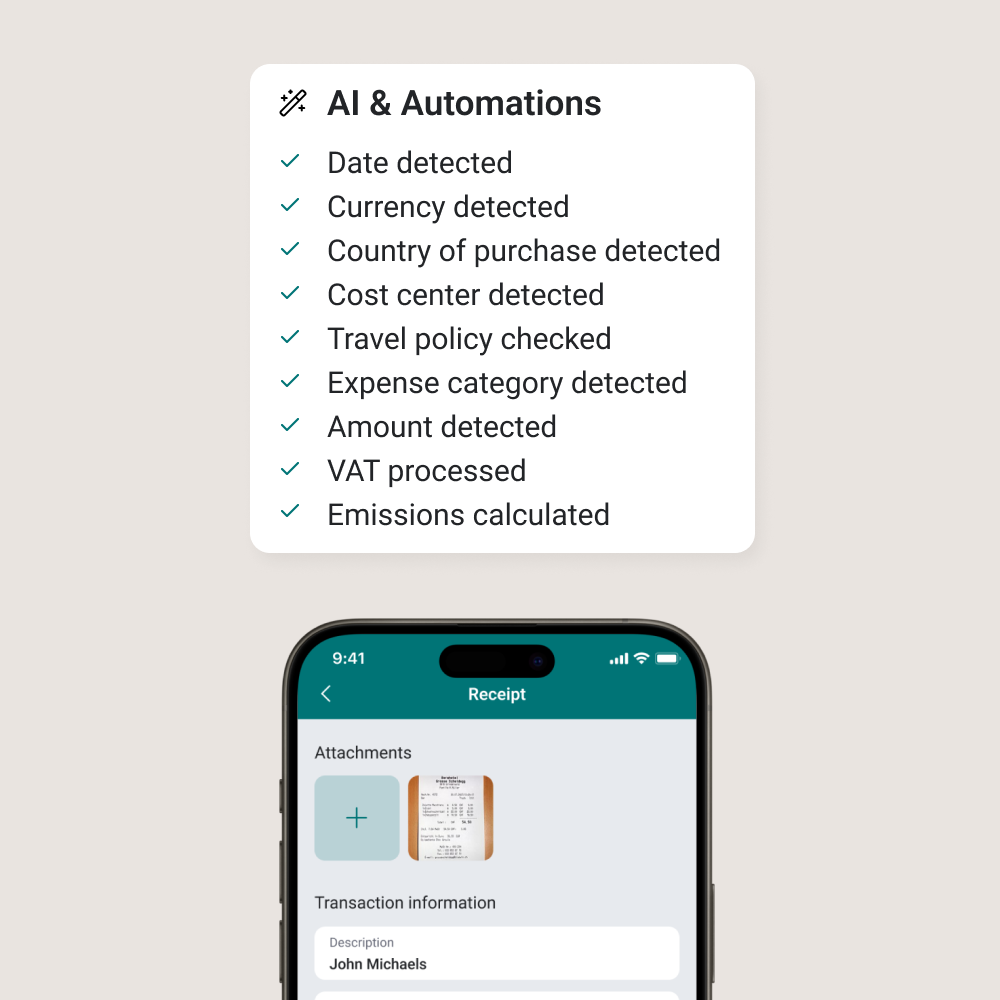
Automation addresses these problems directly. Modern expense management platforms can integrate map-based mileage calculation, automatically applying the correct rate for the country where the trip took place and generating a compliant record of each journey. This removes the guesswork from distance calculation and ensures that the rate applied to every claim reflects the current approved figure, not whatever was loaded into a spreadsheet months ago.
For companies operating across multiple countries, automated rate management is particularly valuable. When an official rate changes, updating it in a centralised platform immediately propagates the correct figure across all employee claims, without requiring manual updates to country-specific spreadsheets or policy documents. Bezala’s integrated map feature handles this kind of mileage tracking natively, connecting route calculation, rate application, and receipt-level documentation in a single workflow that finance teams can audit with confidence.
The broader shift toward automated company mileage rates management also supports better data visibility. When every trip is logged digitally with consistent metadata, finance leaders can analyse travel patterns, identify cost-saving opportunities, and demonstrate compliance during audits without scrambling to reconstruct records. As mileage reimbursement continues to evolve alongside fuel markets, vehicle technology, and regulatory changes, the companies best positioned to respond quickly are those that have already replaced manual processes with systems built to adapt.
This content was generated with the help of AI and it may contain mistakes